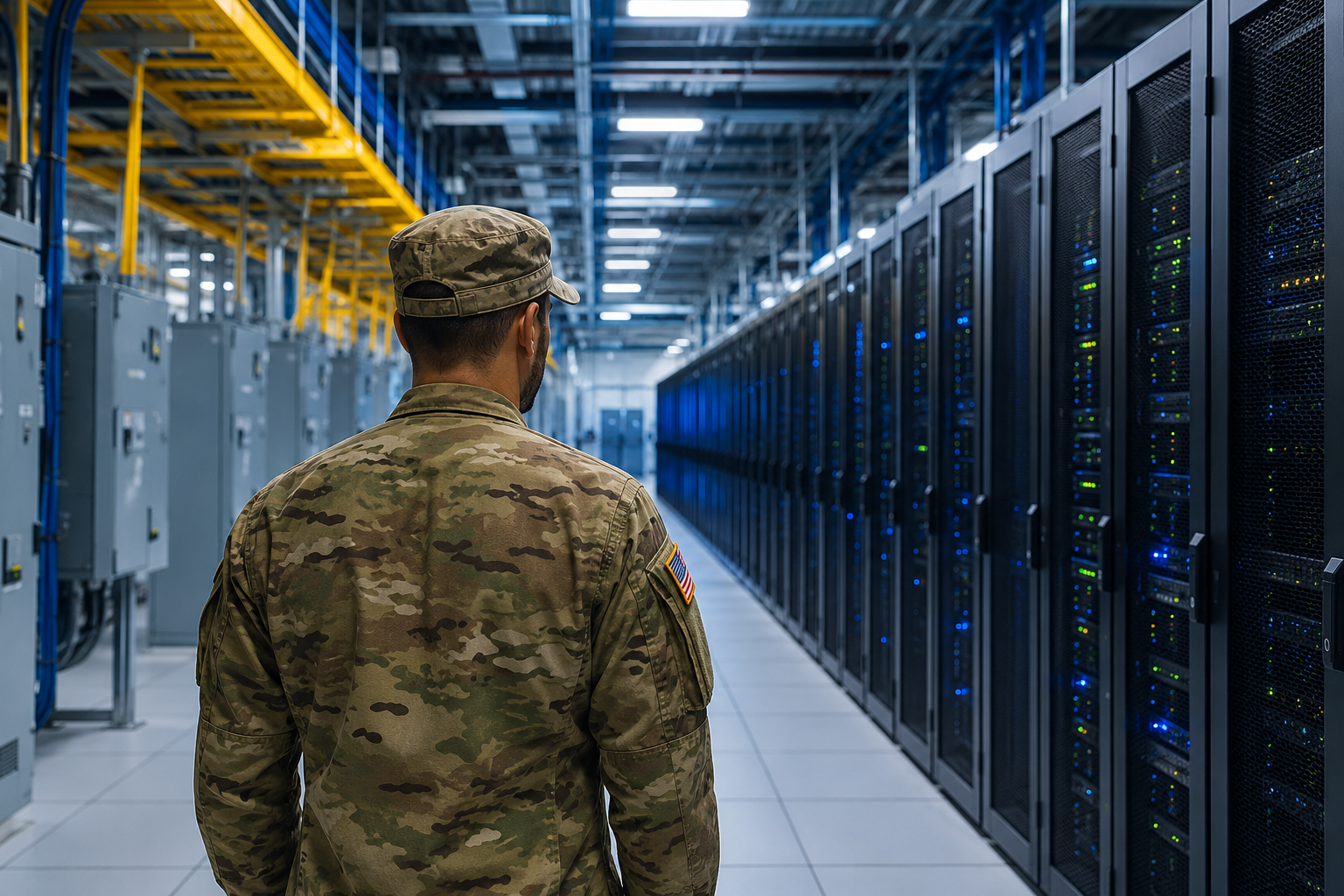
AI Is Creating More Than Coding Jobs: Why Veterans Are Built for the Data Center Boom
Artificial intelligence is creating more than software and coding careers. The rapid expansion of AI data centers is increasing demand for electricians, HVAC specialists, facilities technicians, cybersecurity professionals, logistics experts and other skilled workers who keep mission-critical infrastructure running. With their technical training, operational discipline and experience working under pressure, military veterans are especially well positioned to help build and maintain the physical systems powering the AI economy.
Artificial intelligence is often discussed in terms of software, algorithms and automation. But every AI tool depends on something much more physical: enormous data centers filled with servers, electrical systems, cooling equipment and communications infrastructure.
Building and operating that infrastructure requires skilled people—and military veterans may be among the workers best prepared to do it.
Alphabet, Microsoft, Meta and Amazon are expected to spend nearly $700 billion this year as they expand the data centers and related infrastructure needed to support artificial intelligence. At the same time, employers are struggling to find enough qualified workers to build, maintain and protect these facilities.
This emerging workforce shortage could create an important career opportunity for transitioning service members and veterans.
AI jobs are not limited to programmers
When people hear “AI career,” they may picture a software engineer or data scientist writing code. Those jobs are part of the industry, but they represent only one piece of the AI economy.
Data centers also need:
- Electricians and electrical technicians
- Heating, ventilation and air-conditioning professionals
- Mechanical and facilities technicians
- Network and telecommunications specialists
- Cybersecurity professionals
- Construction workers and project managers
- Logistics and supply-chain personnel
- Equipment maintenance technicians
- Critical-environment operators
Many of these occupations combine technical knowledge with practical, hands-on experience. They are sometimes described as “new-collar” jobs because employers may place greater emphasis on technical competence, certifications and specialized training than on a traditional four-year degree.
That creates a potential opening for veterans whose military occupations involved electrical systems, mechanical equipment, aviation maintenance, communications, information technology, engineering, construction, logistics or the operation of mission-critical facilities.
Military experience fits mission-critical environments
A data center cannot simply shut down when something goes wrong. Its employees must monitor complex systems, follow detailed procedures, identify problems quickly and respond without compromising safety or reliability.
Those expectations should sound familiar to many veterans.
Military service develops qualities that are highly relevant to data center operations, including:
- Performing under pressure
- Following safety and operational protocols
- Troubleshooting equipment
- Working effectively as part of a team
- Maintaining accountability for critical systems
- Adapting to rapidly changing conditions
- Completing intensive technical and on-the-job training
The challenge is often not whether veterans possess valuable skills. It is whether civilian employers understand those skills—and whether veterans can translate their military experience into language that hiring managers recognize.
Programs specifically designed for veterans can help close that translation gap.
Employers are building direct pathways for veterans
Hiring Our Heroes and Microsoft have developed the Military Datacenter Pathway-VETS program for veterans with backgrounds in electrical work, mechanical systems, maintenance or HVAC.
The eight-week program prepares participants for Critical Environment Technician positions in Microsoft data centers. Seven weeks are completed virtually, followed by one week of hands-on instruction. Participants receive a $20-per-hour stipend during training and may interview for full-time positions after successfully completing the program.
Critical Environment Technicians help protect the physical infrastructure that keeps a data center operating. Their responsibilities can include monitoring environmental conditions, maintaining equipment, troubleshooting failures and supporting the safety and reliability of the facility.
The program’s first cohort provided 11 transitioning service members and veterans with direct employment opportunities at a Microsoft data center in Phoenix.
Other employers are pursuing similar strategies. Salute Mission Critical has reportedly trained more than 10,000 veterans for data center work and plans to hire thousands more as the industry expands.
These efforts demonstrate that veteran hiring is not simply a charitable initiative. Employers see military talent as a practical solution to a serious workforce need.
The AI employment picture is more complicated than it appears
AI is changing the labor market, and some workers are understandably concerned that automation will eliminate jobs. That concern should not be dismissed.
But the growth of AI is also producing new types of work.
The technology may automate certain office tasks while simultaneously increasing demand for the electricians, technicians, engineers, cybersecurity professionals and skilled tradespeople required to build and maintain its physical infrastructure.
For veterans, the lesson is not that everyone must become a programmer. It is that technology is becoming part of nearly every occupation.
An electrician working in an advanced data center may need digital diagnostic skills. A facilities technician may work with automated monitoring systems. A cybersecurity professional may help protect both information networks and physical infrastructure. A logistics specialist may support equipment moving through a highly complex technology supply chain.
Digital literacy and technical adaptability will increasingly complement—not replace—the practical abilities many veterans already possess.
What veterans can do now
Veterans interested in this sector should begin by looking beyond job titles and identifying the underlying skills employers need.
Military experience involving power generation, electronics, telecommunications, HVAC, engineering, mechanics, facilities management, cybersecurity, safety compliance or preventive maintenance may transfer directly into data center work.
Veterans should also consider:
- Translating military responsibilities into civilian technical language.
- Identifying certifications required for their target position.
- Building basic knowledge of data center operations and infrastructure.
- Exploring veteran-specific fellowships, apprenticeships and paid training programs.
- Looking for employers that recognize military training as relevant experience.
- Developing digital skills that complement existing mechanical or technical expertise.
A veteran does not necessarily need to start over. In many cases, the better strategy is to add targeted civilian training to skills already developed during military service.
Employers must recognize the opportunity
Companies building the AI economy also have a responsibility to create accessible pathways into these careers.
That means reviewing job descriptions that unnecessarily require college degrees, training recruiters to understand military occupations, investing in paid training and apprenticeship programs, and partnering with veteran-serving organizations that can help identify qualified candidates.
Veterans bring more than technical experience. They bring reliability, leadership, resilience and an understanding of what it means to protect systems that cannot fail.
As data centers become part of the country’s essential infrastructure, those qualities will become increasingly valuable.
Building the workforce behind the technology
The AI revolution will not be built by software developers alone.
It will also be built by the people who install electrical systems, maintain cooling equipment, secure networks, manage facilities, troubleshoot failures and keep critical infrastructure operating around the clock.
Veterans have been performing comparable missions throughout their military careers. With the right training, career guidance and employer partnerships, they can play a major role in building the infrastructure that will power the next generation of American technology.
At GI Go Fund, we believe veterans should have access to more than just available jobs. They should have pathways into growing industries where their military experience is respected, understood and rewarded.
The data center boom may represent one of those pathways—and an opportunity for veterans to remain mission-driven while helping build what comes next.